

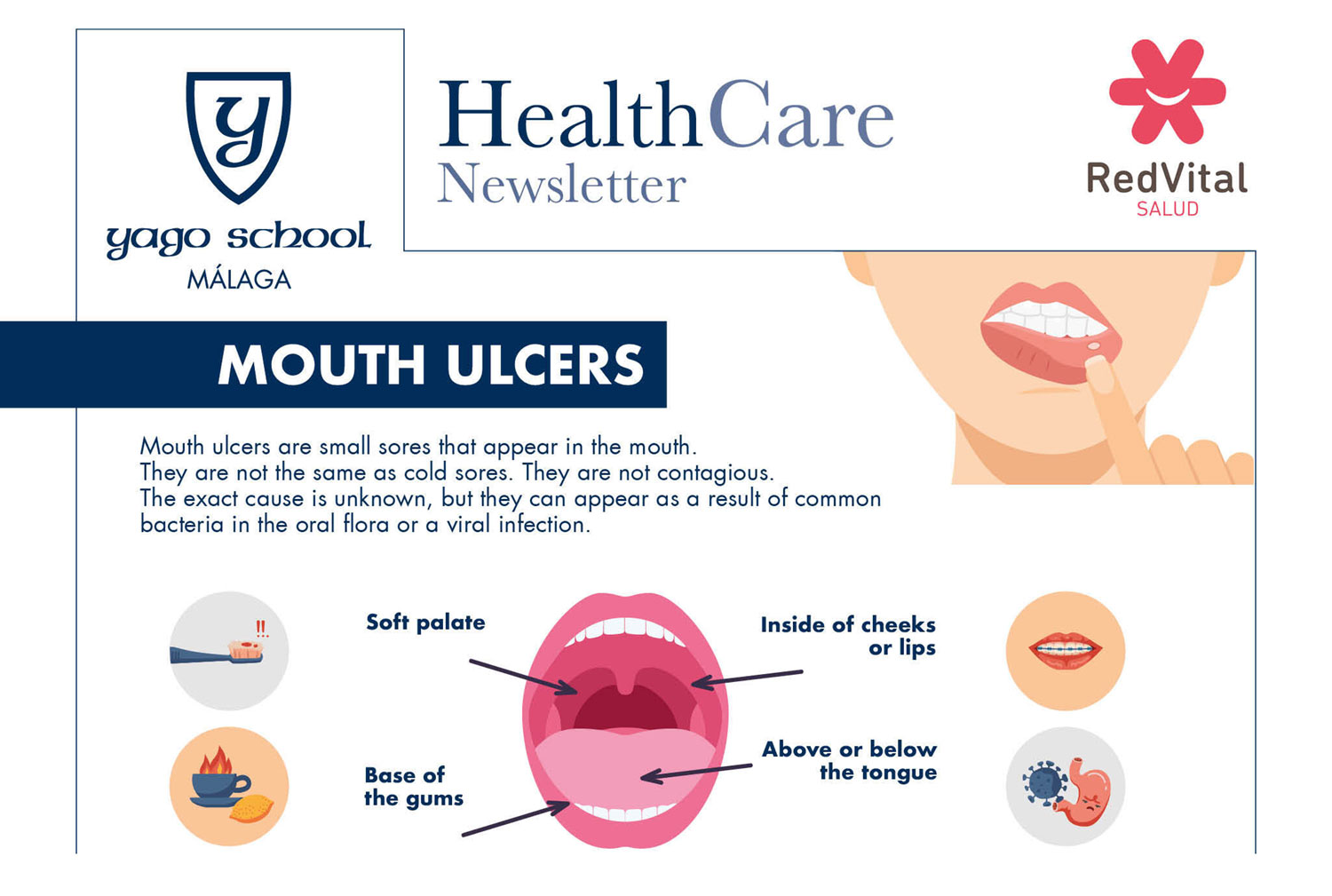
Mouth ulcers are a common nuisance in childhood and, although usually not serious, they can cause pain and discomfort in children’s daily activities.
At Yago School Málaga, we want to provide you with all the details so you know how to care for your children and help them recover more quickly and comfortably. Join us to learn more.
What are mouth ulcers?
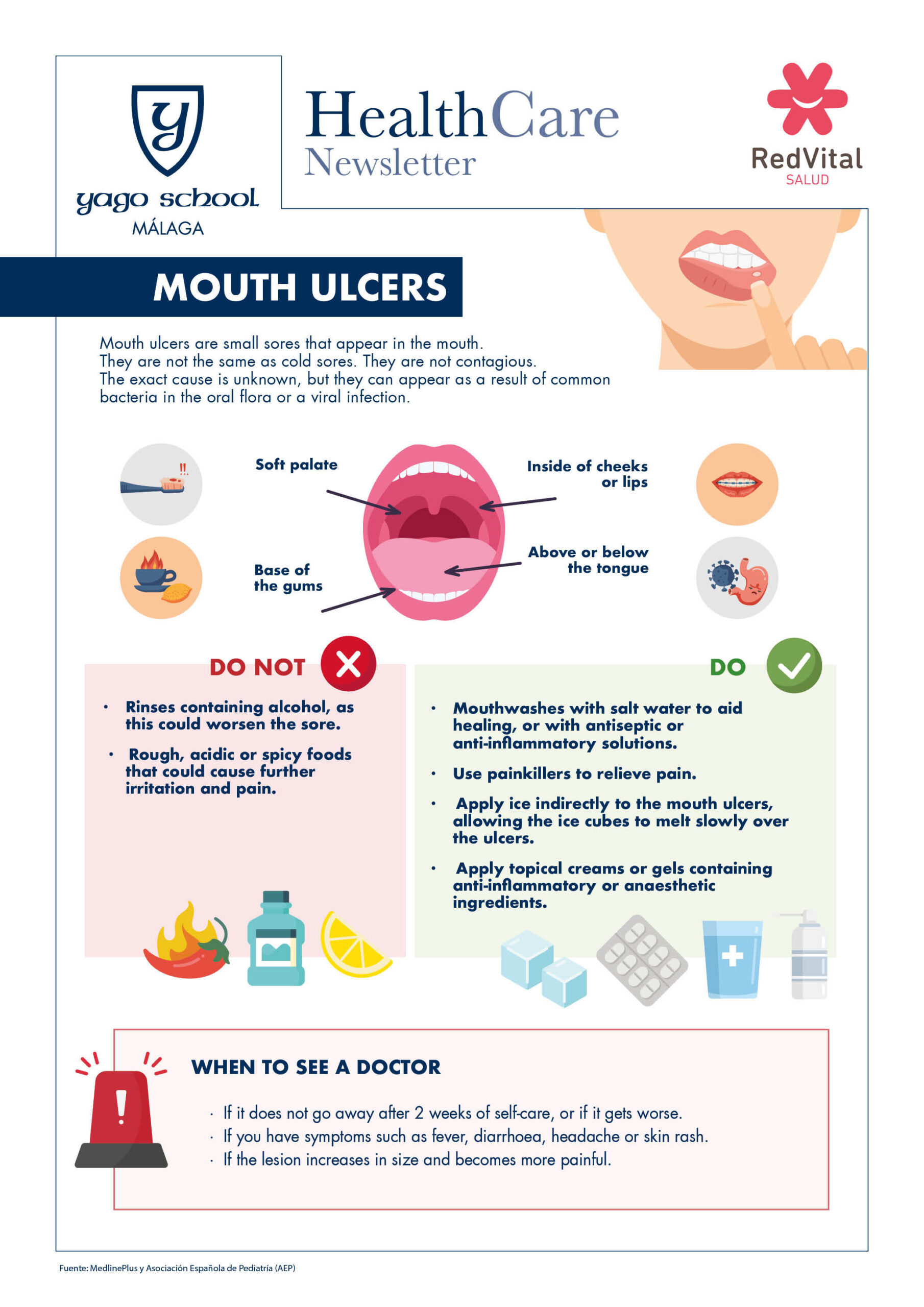
Mouth ulcers, also known as canker sores, are small sores that appear inside the mouth, usually on the lips, cheeks, gums, or tongue. They are common in children and teenagers and, although they can be uncomfortable, they are not contagious and should not be confused with cold sores (herpes).
The exact cause of mouth ulcers is not always known, but they may appear due to common bacteria in the oral flora, minor injuries inside the mouth, or certain viral infections. In most cases, mouth ulcers heal on their own within one to two weeks.
Types of mouth ulcers
There are three main types of mouth ulcers: minor, major and herpetiform. Here’s what you need to know about each.
Minor ulcers
These are the most common and appear as small, round sores with a whitish centre and a red border. They usually heal on their own within one to two weeks and do not leave a scar.
Major ulcers
These are larger, deeper sores that can cause more pain and make eating or speaking difficult. They take longer to heal and, in some cases, may leave a scar.
Herpetiform ulcers
These are characterised by the appearance of multiple very small ulcers grouped in the same area of the mouth. Although they can merge to form a larger lesion, they usually disappear within one to two weeks.
How to Relieve Mouth Ulcers
The nursing team at Yago School Málaga recommends some simple measures to help reduce discomfort and support healing:
- Rinse the mouth with salt water or antiseptic or anti-inflammatory mouth solutions.
- Use pain relief medication if necessary, always following medical advice.
- Apply cold indirectly, allowing small pieces of ice to slowly dissolve over the ulcer.
- Use topical creams or gels with anti-inflammatory or numbing ingredients.
What to Avoid
To prevent further irritation, it is advisable to avoid:
- Mouthwashes containing alcohol, as they may worsen the irritation.
- Rough, acidic, or spicy foods, which can increase pain and discomfort.
When to See a Doctor
It is recommended to consult a healthcare professional if:
- The ulcer does not disappear after two weeks.
- The lesion increases in size or becomes more painful.
- The child develops symptoms such as fever, diarrhoea, headache, or skin rash.
In summary, in most cases, mouth ulcers in children are mild lesions that heal on their own within a few days. With some basic care and by avoiding foods or products that may irritate the area, it is possible to relieve discomfort and support healing. If there is any doubt, or if the sores persist, it is best to consult a healthcare professional to assess each case.